
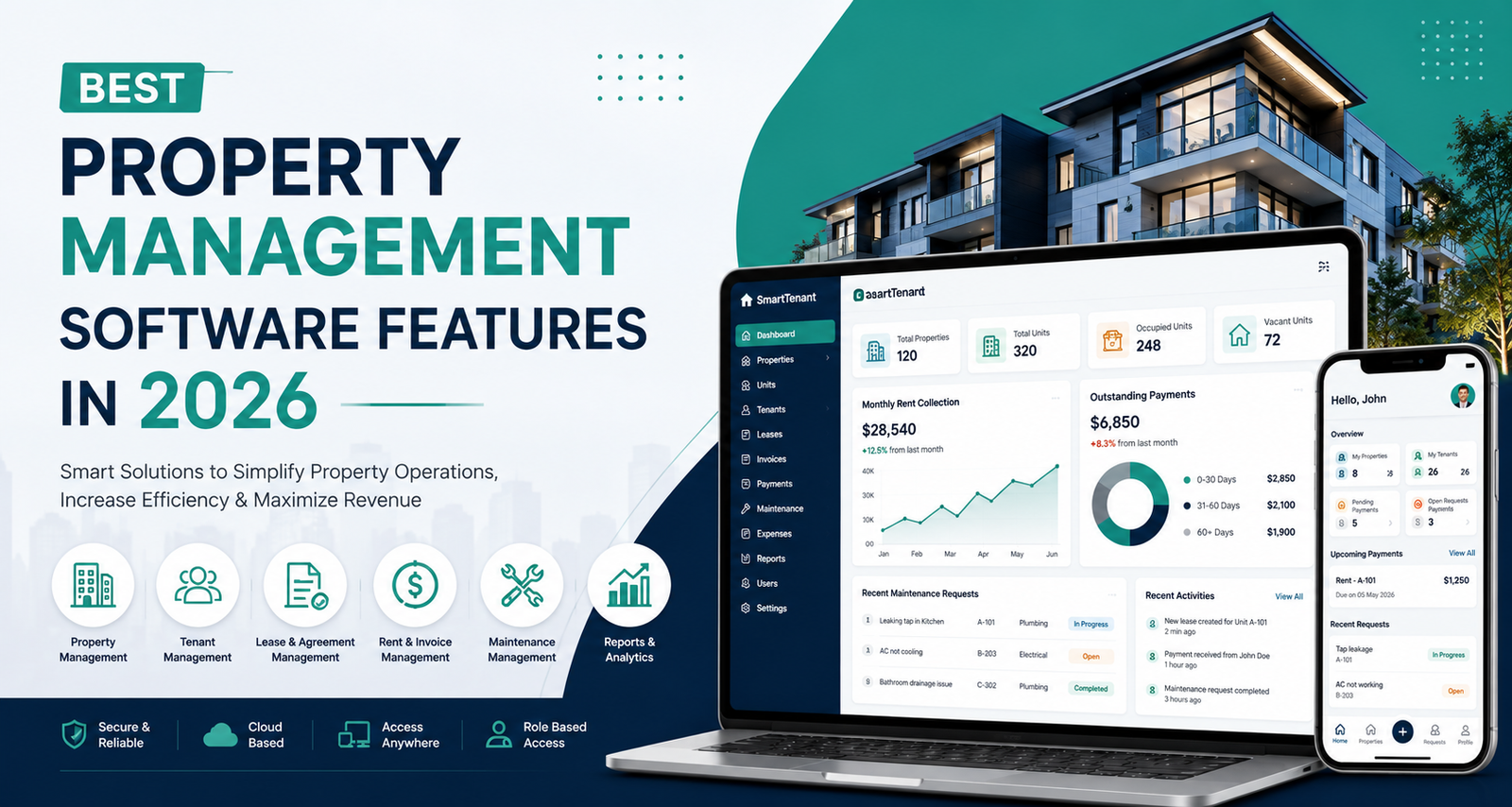
Looking for a ready-made solution?
👉 Property Management System
https://smartwebinfotech.com/items/smart-tenant-saas-property-management-system/1007
Managing rental properties has become increasingly complex. Property managers, landlords, and real estate businesses need to handle tenants, leases, rent payments, maintenance requests, expenses, documents, and communication—all while maintaining accurate records.
In 2026, property management software is no longer just a tool for storing tenant information. Modern solutions help automate daily operations, centralize property data, improve tenant communication, and give property managers better visibility into their businesses.
If you are planning to invest in a property management system, here are the most important features to look for in 2026.
1. Centralized Property Management
A good property management system should provide one central place to manage all properties.
Whether you manage residential apartments, commercial properties, offices, houses, or multiple rental units, the software should allow you to organize property information efficiently.
Important capabilities include:
- Property and unit management
- Property type and category management
- Unit availability tracking
- Property documents
- Owner information
- Rental status
- Property-related expenses
A centralized system reduces dependence on spreadsheets and makes important information easier to access.
2. Tenant Management
Tenant management is one of the core features of property management software.
Property managers should be able to maintain complete tenant records, including contact information, assigned properties, lease details, payment history, and important documents.
A modern tenant management module can help businesses quickly access tenant information and maintain better records throughout the rental lifecycle.
3. Lease and Rental Agreement Management
Managing multiple rental agreements manually can become difficult as a property portfolio grows.
Property management software should help users manage:
- Lease start and end dates
- Rental amounts
- Security deposits
- Agreement documents
- Lease status
- Renewal information
Having all lease information available in one system makes it easier to track active agreements and prepare for upcoming renewals.
4. Automated Rent and Invoice Management
Rent collection and financial tracking are essential parts of property management.
Modern property management software should simplify recurring rent management and invoice generation.
Useful features may include:
- Rent invoice generation
- Payment tracking
- Outstanding payment records
- Payment history
- Receipt generation
- Recurring billing
- Payment reminders
Automation can reduce repetitive administrative work and help property managers maintain more accurate financial records.
5. Online Payment Integration
Digital payments have become an important convenience for both tenants and property managers.
Property management platforms in 2026 should support secure online payment options where appropriate. Depending on the software, businesses may integrate payment gateways to accept rental payments and other property-related charges.
Online payments can make the payment process more convenient while creating a clearer transaction history.
6. Maintenance Request Management
Maintenance issues are unavoidable in property management.
Instead of handling maintenance requests through phone calls, messages, and spreadsheets, a property management system should provide a structured process.
Tenants or staff should be able to report issues, while property managers can track each request from submission to completion.
A maintenance management module may include:
- Maintenance request creation
- Issue descriptions
- Priority levels
- Status tracking
- Staff or vendor assignment
- Supporting images and documents
- Maintenance history
This creates better visibility and helps ensure that important maintenance issues are not overlooked.
7. Expense Management
Property managers need to understand how much they are spending on each property.
Expense management features can help track costs such as repairs, maintenance, utilities, contractor payments, and other operational expenses.
With centralized expense records, businesses can better understand property performance and maintain more organized financial information.
8. Role-Based Access Control
Different users need different levels of system access.
For example, an administrator may require access to the entire system, while a property manager, employee, owner, or tenant may only need access to specific information.
Role-based permissions help administrators control who can view, create, update, or manage different areas of the software.
This becomes especially important for growing property management companies with multiple employees and departments.
9. Tenant and Staff Communication
Clear communication can significantly improve property management operations.
Modern software should help centralize important communication related to properties, payments, maintenance, and tenant requests.
Depending on the platform, communication features may include:
- Email notifications
- System notifications
- Announcements
- Payment reminders
- Maintenance updates
Centralized communication can reduce confusion and improve response times.
10. Document Management
Property businesses handle many important documents, including rental agreements, tenant documents, property records, invoices, and maintenance files.
A property management platform should provide an organized way to upload and manage these documents.
Digital document storage reduces paperwork and makes important records easier to find when needed.
11. Dashboard and Business Reports
A modern property management dashboard should provide a quick overview of business operations.
Useful dashboard information may include:
- Total properties
- Total units
- Occupied and available units
- Active tenants
- Rent collected
- Outstanding payments
- Income and expenses
- Open maintenance requests
Reports can also help property managers analyze performance and make better operational decisions.
12. Multi-Property Management
Businesses managing multiple properties need software that can scale with their portfolio.
A good system should allow users to manage multiple properties and units without creating separate processes for each location.
This is particularly useful for property management agencies, real estate companies, landlords with growing portfolios, and businesses operating across multiple locations.
13. Multi-Language and Multi-Currency Support
Property management businesses increasingly operate across different regions and countries.
For global use, multi-language and multi-currency capabilities can make a property management platform more flexible.
These features are especially valuable for software providers, international property businesses, and organizations serving users in different markets.
14. SaaS and Multi-Tenant Capabilities
For entrepreneurs and software businesses, a SaaS-based property management platform can provide additional opportunities.
A multi-tenant architecture allows multiple organizations to use the same software platform while maintaining separate business data and accounts.
A property management SaaS solution may include:
- Subscription plans
- Organization management
- User limits
- Feature-based packages
- Payment gateway integration
- Centralized administration
This makes it possible to launch a property management software business without developing the entire platform from the beginning.
15. Mobile-Friendly User Experience
Property managers often work outside the office.
A responsive property management system allows users to access important information from desktops, tablets, and mobile devices.
In 2026, mobile-friendly design should be considered an essential feature rather than an optional addition.
How to Choose the Best Property Management Software
The best property management software depends on your business requirements.
Before selecting a platform, consider:
- The number of properties and units you manage
- The number of employees who need system access
- Your rent collection process
- Maintenance management requirements
- Required reports
- Payment gateway requirements
- Customization needs
- Whether you need a self-hosted or SaaS solution
Instead of choosing software based only on the number of features, focus on whether those features solve your actual operational challenges.
Why Property Management Software Matters in 2026
As property portfolios grow, manual processes become increasingly difficult to manage.
Property management software can help centralize information, automate repetitive tasks, improve financial visibility, organize maintenance workflows, and create better experiences for property managers and tenants.
The right platform can save administrative time and provide a stronger foundation for business growth.
Looking for Property Management Software?
Smartweb Infotech provides ready-to-use business software solutions designed to help entrepreneurs and businesses launch and manage digital platforms.
If you are looking for a property management solution, explore our property management software and discover features designed for modern rental and property operations.
You can review the available features, explore the live demo, and choose a solution based on your business requirements.
Frequently Asked Questions
What is property management software?
Property management software is a digital system that helps landlords and property management businesses manage properties, tenants, rental agreements, payments, maintenance requests, expenses, and other day-to-day operations.
What are the most important property management software features?
Important features include property and unit management, tenant management, lease tracking, rent management, online payments, maintenance requests, expense tracking, reporting, document management, and role-based access control.
Can property management software manage multiple properties?
Yes. Many modern property management platforms allow businesses to manage multiple properties and units from one centralized system.
Is property management software useful for individual landlords?
Yes. Landlords managing a small number of rental properties can use property management software to organize tenant information, track rent payments, manage agreements, and maintain property records.
What is property management SaaS software?
Property management SaaS is a software platform that allows property management services to be provided online, often through subscription plans. Multi-tenant SaaS platforms can support multiple businesses or organizations from one central application.
Should property management software be mobile-friendly?
Yes. A responsive, mobile-friendly system allows property managers and other users to access important information from different devices, making day-to-day property operations more convenient.
Comments (0)